

Somali Chapati (Sabaayad) Chapati Somali

Somali Chapati (Sabaayad) Chapati Somali

Somali Chapati (Sabaayad) Chapati Somali


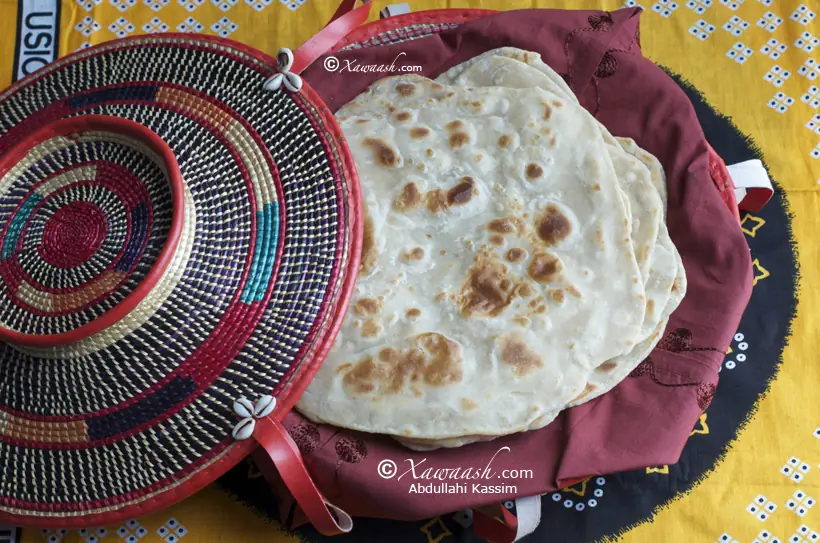
This flatbread is different from the Indian chapati and is more like a paratha. The Somali chapati (sabaayad) is crispy on the outside and flaky and tender inside. It is slightly sweet, and it is cooked to a golden colour with a little oil. This style of chapati is popular in many parts of East Africa and it is usually served with different types of stews.

Unlike Anjero, this is not a bread that is made daily, but is more like a weekly treat. In Somalia, it is usually served for lunch with a goat or lamb stew. It is also served as an afternoon snack with some honey and a cup of tea. Sabaayad is more popular in the northern parts of Somaliawhere it is a must-have when inviting people over or for occasions like festive gatherings and weddings.

We had a recipe for sabaayad but we wanted to make a more tender one. We looked for other recipes and we got help from two friends. Maryan Abdi’s version of sabaayad was made from a combination of all-purpose flour and durum atta flour. It also had eggs in it. The result was a tender and flaky sabaayad, but we wanted the first recipe of sabaayad that we were going to post to have ingredients that are readily available to all our viewers. Atta flour is not readily available to some. Eggs are also not added to sabaayad by most Somalis. However, we hope to post Maryan’s recipe at a later date.

Fouwzia Haji Hussein is another friend who gave us a recipe for sabaayad. She used all-purpose flour, milk and water, which is what most Somalis use, but she added baking powder. The result was also a good sabaayad that was tender and flaky.

Our recipe builds on those two recipes with some changes. We wanted the sabaayad to stay tender for a longer period and in order to do that we decided to add some whole wheat flour and to use hot milk. We sifted the whole wheat flour so as not to alter the taste of the traditional Somali sabaayad. We were pleased with the result and we hope that you will also be pleased with it.


Cette galette de pain est différente du chapati Indien et il est plus proche du paratha. Le chapati Somali (Sabaayad) est croustillant dessus et feuilleté et tendre à l’intérieur. Il est légèrement sucré, et il est doré avec un petit peu d’huile. Ce style de chapati est populaire dans de nombreuses régions d’Afrique de l’Est et d’habitude il est servi avec différents ragoûts.

A la différence de l’Anjero, ce n’est pas un pain pour tous les jours, mais plutôt le pain spécial de la semaine. En Somalie, il est coutume de le servir avec un ragoût de chèvre ou d’agneau. Il est aussi servi comme en-cas l’après-midi avec du miel et une tasse de thé. Sabaayad est plus populaire dans le Nord de la Somalie, où il est indispensable lorsqu’on reçoit des invités pour les grandes occasions comme les fêtes et les mariages.

Nous avions déjà une recette du sabaayad mais nous voulions en faire un plus tendre. Nous avons cherché d’autres recettes et nous avons reçu l’aide de deux amies. La version de Maryan Abdi du sabaayad est composée d’un mélange de farine blanche et de farine durum atta (farine de blé dur, utilisée pour les chapati indiens). Elle contient aussi des oeufs. Le résultat était un sabayaad tendre et feuilleté, mais nous voulions que la première recette de sabaayad que nous allions publier, contiennent des ingrédients faciles à trouver pour nos lecteurs. La farine atta n’est pas accessible à tous. Les oeufs ne sont pas utilisés dans le sabaayad par la plupart des Somalis. Cependant nous espérons publier la recette de Maryan bientôt.

Fouwzia Haji Hussein est un autre amie qui a partagé sa recette du sabaayad. Elle utilise de la farine blanche, du lait et de l’eau, ce que la plupart des Somalis utilisent, mais elle ajoute de la levure. Le résultat était aussi un bon sabaayad qui était tendre et feuilleté.

Notre recette s’inspire de ces deux recettes avec quelques modifications. Nous voulions que le sabaayad reste tendre plus longtemps et pour se faire nous avons choisi d’utiliser de la farine complète et du lait chaud. Nous avons tamisé la farine complète pour ne pas modifier le goût du sabaayad Somali traditionnel. Nous avons apprécié le résultat et nous espérons que vous l’apprécierez aussi.


Ingredients:

(1 cup = 237 mL; 1 Tbsp = 15 mL; 1tsp = 5 mL)

3 cups                       All-purpose flour
1 cup                        Whole wheat flour 
2 Tbsp                       Canola (or vegetable) oil
1 tsp                         Baking Powder
2 Tbsp                       Granulated sugar
1 tsp                         Salt
2 cups                       Milk (hot)
1¼ cups                    Oil for cooking (optional) 

Yields 8 chapatis

Waxa loo baahanyahay:   

(Q.W. waa qaaddo weyn – midda cunnada lagu cuno) (q.y. waa qaaddo yar)

(1 koob = 237 mL; 1 QW = 15 mL: 1 qy = 5 mL)

3 koob                      Bur cad
1 koob                      Bur madow 

2 Q.W.                     Saliid cad
1 q.y.                      Baking powder
2 Q.W.                     Sokkor
1 q.y.                      Cusbo
2 koob                     Caano (kulul)
1 1/4 koob               Saliid lagu dubo sabaayadda (waa ka-dhaafi kartaa)

Waxaa fiirsataa ‘video’ga sida loo sameeyo.

Wuxuu noqonaayaa 8 xabo

Ingrédients:

(1 mesure= 237 mL; 1 cs = 15 mL; 1cc = 5 mL)

3 mesures de Farine Blanche
1 mesure de Farine de Blé Complète
2 cs d’Huile de Colza ou d’Huile Végétale
1 cc de Levure
2 cs de Sucre en Poudre
1 cc de Sel
2 mesures de Lait (chaud)
1¼ mesure d’Huile pour la cuisson (optionnel)

Directions:

Sift the whole wheat flour. 

Put all the ingredients, except the milk, in a mixing bowl. Start the mixer and gradually pour in the hot milk. Mix for 5 minutes. If mixing by hand, pour in the hot milk and mix with a wooden spoon. Knead the dough for at least 15 minutes. Smear 1 tablespoon of oil on the dough and transfer to a plastic bag. Let the dough rest for 30 to 45 minutes.

Shape the dough into an elongated form and cut into 8 equal pieces. Roll out each piece of dough into a rectangular shape as shown. Spread 1 tablespoon of oil on the surface of the dough, then fold as shown.

Roll out the chapati dough making it into a thin rectangle. If you prefer, you could make your chapati into a circular shape.

Place the chapati on a preheated skillet set on medium heat. Wait until bubbles start to form, about 1 minute. Flip the chapati and pour 1 tablespoon of oil underneath it. You can eliminate the oil if you so desire. 

Reduce the heat to low. Push down the edges of the chapati to maintain contact with the pan. You can use a towel or a spatula for pushing down the chapati. Flip again and add another tablespoon of oil underneath the chapati. Flip 4 or 5 times without adding more oil. Cook the chapati for a total of 4 to 5 minutes.

Place the chapati in a covered container to keep them warm and tender. Serve with Chicken Stew (Maraq Digaag) or any other stew that you prefer. 
Instructions:

Tamiser la farine complète.

Mettre tous les ingrédients, sauf le lait, dans un bol mélangeur. Démarrer le mixer et verser petit à petit le lait chaud. Pétrir pendant 5 minutes. Si vous pétrissez à la main, verser le lait chaud et mélanger avec une cuillère en bois. Pétrir la pâte pendant au moins 15 minutes.

Étaler un cuillère à soupe d’huile sur la pâte et la mettre dans un sachet en plastique. Laisser reposer la pâte pendant 30 à 45 minutes.

Étirer la pâte et la couper en 8 morceaux égaux. Étaler chaque morceau de pâte en rectangle comme montré sur la photo. Étaler une cuillère à soupe d’huile sur la surface de la pâte, puis rabattre comme montré. 

Étaler la pâte à chapati en rectangle fin. Si vous préférez, vous pouvez faire votre chapati en forme circulaire.

Placer le chapati sur une poêle préchauffée à feu moyen. Attendre que des bulles commencent à se former, environ 1 minute. Retourner le chapati et verser 1 cuillère à soupe d’huile dessous. Vous pouvez éliminer l’huile si vous le souhaitez.

Réduire le feu au minimum. Appuyer sur les bords du chapati pour qu’ils restent en contact avec la poêle. Vous pouvez utiliser un torchon ou une spatule pour appuyer sur le chapati. Le retourner à nouveau et ajouter une cuillère à soupe sous le chapati. Retourner 4 ou 5 fois sans ajouter plus d’huile. En tout le chapati cuit 4 à 5 minutes.

Poser le chapati dans un récipient couvert pour le garder chaud et tendre. Servir avec du Poulet Mijoté (Maraq Digaag) ou avec le ragoût que vous préférez.

Preparing the dough – Préparer la pâte 

1. Tamiser la farine complète
2. Mettre tous les ingrédients dans un bol mélangeur
3. Mélanger et ajouter graduellement le lait chaud
4. Étaler 1 cuillère à soupe d’huile sur la pâte
5. Laisser reposer la pâte dans un sachet en plastique 30 à 45 minutes.
6. Couper en 8 parts égales
7. Faire des boules avec chaque morceau
8. Couvrir la pâte

Rolling out the dough and creating the layers – Étaler la pâte et réaliser le feuilletage 

1. Étaler la pâte en rectangle
2. Déposer 1 cs d’huile sur la surface
3. Plier comme montré sur la photo
4. Plier comme montré sur la photo
5. Plier comme montré sur la photo
6. Plier comme montré sur la photo
7. La pâte pliée
8. Étaler la pâte pliée

Cooking the Chapati (Sabaayad) – Cuire les chapatis 

1. Poser la pâte à chapati sur une poêle préchauffée à feu moyen 2. Attendre que les bulles apparaissent à la surface (environ 1 min.) 3. Retourner le chapati 4. Appuyer sur les bords pour qu’ils restent en contact avec la poêle 5. Utiliser une spatule pour appuyer sur les bords 6. Mettre une cuillère à soupe d’huile sous le chapati. Retourner à nouveau et ajouter une autre cuillère à soupe d’huile sous l’autre côté du chapati. Retourner la chapati 4 ou 5 fois jusqu’à ce qu’il soit cuit (4 à 5 minutes).

Somali Chapati (Sabaayad) Chapati Somali


Somali Chapati (Sabaayad) Chapati Somali


Tender & Flaky – Tendre et Feuilleté


Chicken Stew with Somali Chapati (Sabaayad) – Poulet Mijoté et Chapati Somali (Sabaayad)


Somali Chapati (Sabaayad) served with Chicken Stew – Chapati Somali (Sabaayad) servi avec du Poulet Mijoté


97 thoughts on “Somali Chapati (Sabaayad) Chapati Somali”

  • I use to make sabayaad without milk and whole wheat but it is so goood i tried to make it yesterday and followed the way u make it and it became the best sabaayad I ever tasted. WELL DONE .jazakulaahu qeyr every thing u sharing with us. thankzzz

    • Thank you very much, Zamiira. We are very happy you liked it. We will post another recipe for sabaayad soon insha-Allah. The new recipe will be a little sweeter and will be great as a snack with Somali tea.

  • WALAAL WAAD MAHANSAN TAHAY CUNTADA MACAAN OO AAD NOO SOO GALASID. WALAAL WAXAAN RABAA IN AAN KAA CODSADO IN AAD SOO GALSID DOORO. WAAD MAHADSANTAHAY…

  • dear webmester u mast know that we proud some one like u thnk u very much and may allah reward u for this .

  • masha allaaaaaah sis ilaahey ajar haka siiyo aad baan uga helay websitkiina, fadlaan qiyaasta koobka nogu badal gr wayo koobka aad isticmaaleyso iyo midka aan istimaaleyno isku mid mahan ado mahadsan sis si ay qiyaasta noga qaldamin somalina nooraaci.. mahadsanid mar labaad..

    • Hadduu Ilaahey yiraahdo mar dhow ayaan ku-qori doonnaa miisaanka (grams). Kuwa ugu dambeeyay way leeyihiin, kuwii hore ayaan ku-noqon doonnaa. Mahadsanid.

  • ASC walaalaheyga qaali ohoow aada yaan isiin salaamayaa marka hore marka labaadna aad ayaad u mahad santihiin. walalo waxaan idinka codsanayaa in aan inoo soo gilisaan sida loo dubo Tortaha adinka oo mahadsan ilaahna qeyrbadan ha idin siiyo aamin.

  • I’ve been looking for this kind of recipe for a while now.I haven’t made the sabaayah yet, But I will inshAllah.Thank you for posting this and everything else on this amazing website.I have a SMILE on my face to have found this website and to know that younger generation in the diaspora will actually be able to make Somali food the right way.May God reward you for your efforts.

    • Thank you very much for kind words. You put a SMILE on our faces! Thank you for taking the time to comment.

  • asc,walaalayaal aad iyo aadaa umahadsantihiin sida fiican oo wax noogu qabaten wa kumahadsantihiin rabi haniibarakeeyo aad aa niixiiseeyaa wana kufaraxsanahay 100%100 wallaal waxaa kaacodsanaa sida xawaashka usameeyneesid oo muuqaal ah waana kumahadsantihiin

    • Wacalaykum Assalaam Waraxmatullaahi Wabarakaatuhu,
      Anagana aad ayaan u-jecelnahay marka aan maqalno inay adinkuna idiin toostay. Hadduu Ilaahay yiraahdo xawaashka oo video ah ayaan soo gelin doonnaa.

  • Asalaama alaikum sis/bro,
    i made this chapati yesterday and i gotta say the best chapati i ever made. i really didnt know how to make it before and i have tired alot ways other people make it and it always ends up being dry. But your recipe is great; it is tender, soft, and to die for. THank you million times for sharing this and many other great wonderful recipes.
    may Allah bless you for sharing.

    • Wacalaykum Assalaam Waraxmatullaahi Wabarakaatuhu,
      Thank you very much for the very nice comment. We are happy that you loved the chapati, please try the other recipes also.

  • i was wondering if you could just another cup of all purpose flour if you do not have whole wheat flour.

    • The original recipe didn’t have all-purpose flour, so you can do without it. Although when we added whole wheat flour the chapati became more tender.

  • asc walaal waxaan idinka codasaa koobka qayaastiisa inaa noo soo galisaan idinkoo mahad san ama noo sheega intuu haya koobka qayaastiisa mahadsanid

    • Wacalaykum Assalaam Waraxmatullaahi Wabarakaatuhu,
      Koobka qiyaastiisa waa 237 mL. Post-ka sabaayadda waan ku-qornay. Mahadsanid.

  • salaamu caleykum waraxmatu laahi wabarakaatuh fadla sawirada aad ka haysaan wadankeeni wax iiga soo dir aadbaan ooga helaye shukran

  • asc wan idin salamay
    hadaa bur madoow heynin sideen yelaa ? burka cad kaliyah maju sameyn karaa mise sidaan oo kale ma u qorxonanayo thanks

    • Wacalaykum Assalaam Waraxmatullaahi Wabarakaatuh,

      Waa ka-sameyn kartaa bur cad oo keliya. Burka madoow sabaayadda wuu sii jilciyaa.

  • This looks great -I’ve alway made chapati but never with milk & baking powder -can you tell me whats the difference ? I usually add water/no baking powder. I’m definitely going to try this recipe as soon as possible, but would love to know the difference in taste, texture! Jazaka Allah khairan 🙂

    • Milk and whole wheat flour is to make the chapati softer, while the baking powder is to help it rise, thus making it more tender. Thank you for your comments.

  • Asalamu Caleykum.

    I have made chapati, rice, suqar, meat, chicken and basto. Mansha Allah it was very good, my husband and i are very greatful, i am cooking IFTAR and I am loving it. Subhannallah after my mother died ( Allah Ya Arxama) I thought will i ever cook like my mother? So my children can say my mummy’s food is the best.
    Alhamdulilah my daughter age 6, said it, “mum you make the best food in the whole world”. Jazakallah Khayr and Ramadan Karim.
    May Allah grant your wishes, Amin

    • Wa’alaikum as-salam warahmatullahi wabarakatuh,
      Thank you very much for sharing your experience with us. We are happy that you let us know how much you enjoyed the recipes. May God have mercy on your mother and may He protect all your family. Ramadan Karim.

  • I love you guys recipes! One question I do have is, typically Somalis use oil to fry the sabaaya. However, I noticed other cultures just fry the sabaayad/chapati without oil. Does the oil contribute to the softness, and is it possible to maintain the softness of the sabayaad w/out the extra oil? Also I noticed that you add baking powder and I’ve never seen baking powder added to sabaayads. I’d like to know what it does for the sabaayad? I have a relative who adds baking powder and it usually turns out a bit harder than other relatives.

    Axsaanti!

    • Thank you very much for your comment. The oil and baking powder contribute to the softness and flakiness of the sabaayad. We used wholewheat flour so they will stay soft even after they cool down. Thank you for the questions.

  • Asalam Aleykum. Jazakhallah Kheir for a lovely blog! Although am not a Somali I just love your lovely recipes. Never knew Somali food could be so nice. Thanks for sharing and May Allah bless u Ameen!

    • Wa’alaikum As-salam Warahmatullahi Wabarakatuh,
      Thank you so much for the lovely comment. Somali food is not as well known and we hope to change that through this blog. God bless you and your family.

  • Hi, just wanted to ask about all purpose flour? is it plain flour or self raising flour? another thing i don’t have the machine that will knead the bread so what shall i do?

    • All-purpose flour and plain flour are the same. Self rising flour has baking powder and salt. If you don’t have the machine you can knead by hand for 10-15 minutes.

  • Mansha Allah thank you so much, walhi I am proud of this SOMALI Website

    My sister And her family may Allah reward in janah for this good things, I’m now learning how to cook food insha Allah i will try more kinds of food and next week i will invite my friends in my house to cook them food and show them how i learned from here so many good things (thanks)

    • Thank you very much for your prayer. We are really happy to know that you like the website and found it helpful. We wish you good luck and hope that you will impress your friends with your new skills.

  • asc waalo yaal aadbaad umahad san tahiin run tii waan kutixanahay wabka maxaayeelay waa wab aad uqiimo badan walaal waxaan kuweeydiinaa waxaad tiri sawirka haraacin mawaxaad ula jeedaa bakin haku darin mida kale anagu waxan joognaa dalkii hooyo marka waxbadan noojilci yacni ingiriiska aaad baad umahasan tahiin thank you

    • Wacalaykum Assalaam Waraxmatullaahi Wabarakaatuh.
      Waan ku faraxsan nahay inaad ka faa’iidaysanaysid goobta Xawaash. Waxaad ku dartaa 1 qaaddo yar baking powder, ka yar ayaa ku dari kartaa laakiinse si fiican uma fooraayo. Af Soomaaliga bog gooni ayaan u sameynay hadda, hadduu Eebbe idmo wixii horena waa la tarjumi doonnaa. Mahadsanid.

  • acs waal aad baan idiinku mahad celinayaa dha maantiin mida kale aan idin weeydiinaa waxeey tahay manoo fasaxa deen inaan ka faa iideeysano ise waa soomali iyo il adeeygeed aan kugalooynaa mahad sanidiin

    • Wacalaykum Assalaam Waraxmatullaahi Wabarakaatuh.
      Goobta Xawaash idinkaa iska leh. Ka faa’iidaysta walaalihiina kalena u faa’iideeya. Mahadsanid walaal.

  • This has been my go-to chapati recipe. Love how they come out soft and fluffy plus stay soft even 3 days later!

    thank you.

  • Salam. .. … Inshallah this is my mission today as I’ve never ever attempted making chapati before. Hope comes out great . And also the baked macaroni was a success mashallah. My family enjoyed it. Jakallallahu kheir. God bless you all with kheir inshallah.

    • We hope everything worked out well for you. We are happy you and your family liked the Baked Macaroni. Thank you very much for your comment. God bless you too.

  • maanshaa allaah alaaaya cisak, walaal aad aayaan ua dhacaay cuntooyinka xawaash.com ay diyaarisay, walaal burka cad gartay oo waa daqiiqda cad ee waa maxay burkaa madaw fadlan idinkoo mahadsan iisoo faahfaahiya walaal

    • Walaal, waa ku mahadsan tahay faallooyinka. Waan ku faraxnay inaad jeclaatay goobta Xawaash. Bur madow waa midka buunshadiisa lagu shiiday. Af-Ingiriika waa “whole wheat flour.”

  • walaal fadlan waxaan idinka codsanayaa inaad ereayadan afsoomaali waxa lagu yidhaahdo ama waxa ay yihiin aad iisoo sheegtaan caqliga iyo cudadaba alle ha idiin dhawree, haday afsoomaali yihiina waxa ay yihiin fadlan igu soo caawiy, iyo waxyaaabaha loo isticmaalo.

    SACTAR, REEXAAN, KUSBARA, BAQDUUNAS, KUSKUS, XUMUS, BIRQUM AMA BURQUM,

    • Waa ku mahadsan tahay faallada. Sactar, reexaan, kusbara, baqduunis waa carfis geedo ama caleemo ah oo cuntada lagu carfiyo. Kusbara waa kabsaro caleen, inta kale waa magacyo Carabi ah af-Soomaaligana waa isku mid. Sactarka Saoomaaliya daawo ahaan ayaa loo cabi jiray. Carabta cunooyin badan ayey ku karsadaan. Reexaanta suugada iyo biitsada ayaa lagu darsadaa. Baqduunis waa sida kabsao caleynta oo kale wax yar ayuu ka caleemo waaweyn yahay, annagana baqduunis ayaan u bixinay. Kuskus waa sida soor galleey oo kale oo sarreen laga sameeyey. Waxaa laga cunaa Morooko, Aljeeriya, Tuunis iyo Liibya. Xumus waa nooc digir, inta la kariyo ayaa la shiidaa. Carabaha iyo Bariga dhexe oo dhan ayaa laga cunaa. Bulgur waa sarreen la jejebshay Carabta iyo Tukida ayaa isticmaalaan. Carabta waxay ka sameeyaan Kibbeh wax la yiraahdo. Hadduu Eebbe idmo waan soo gelin doonnaa sida loo sameeyo. Haddaad wax kale u baahan tahay nala socodsii.

  • maansha allaah. illaahay ajar iyo xasanaad badan hay dinka siiyo walaal aad ayaad iigfa farxiseen waayo mudo dheer ayaan raadinayay inaan helo cid ii fasirta, walaal alle ha idinka farxiyo.

  • Mansha allaah runti waxaad mudantihiin bilad sharaf waxaad kor u qadeen magaca umada somali mahadsanidiin runti dadaalkiina mar uun baad ka miradhaliseen oo maanta guul weyn ayaad noo soo hooydeen mahadsanidiin boqol kun mar.

    • Adigaa mudan walaal. Waan ku faraxnay faalladaada. Sida aad inoo qiimeysay inoona sharaftay, waxaan rajaynaynaa inuu Ilaahay in ka badan ku sharafo. Mahadsanid.

  • Salaam Aleikum,
    Thank you very much for preserving Somali cuisine, you’re doing great job for all Somalis everywhere. The new generations that grew up or will grow up in diaspora now have a place to turn to.
    May Allah reward you with Jannah.

    • Wa’alaikum Assalam Warahmatullahi Wabarakatuh.
      Thank you so much for your wonderful comment. It is nice to know that the effort we put in this website is being recognized. Best wishes to you.

  • Asc, walaal waad mahadsan tahey.waxaan rabaa in aan ku weydiiyo hadii aan waayo baking powder ma ku badali karaa yeast faxiso. Isku sina masoobaxee? Thanks always and may Allah bless you all

  • Maasha-Allah
    waxaad istaahishaan inaad Schools caalami ah u furtaan somaalidan Qurbahana Hot Dog iyo Fastfood-ka ku dhintay. Dalkiina Carbonhydrate Food ku quraacda, ku qadeeya, kuna casheeya sida; laxoox, bariis iyo roodhi.
    Ugu danbayntii ifka hibo ku noolaada, Aakhirana halkii roon.

    • Waad na sharaftay ee Eebbe ha ku sharfo. Waa ku mahadsan tahay hadalada wacan. Eebbe ha kaa yeelo kan adduun iyo aaqiraba ku guulaysta.

  • Aslamu alaykum wa rahmatuallahi wa barakatu, i pray you are well and in the best state of health and emaan….i made the chapati but i just wanted to know why they came out hard

    jazakhallahu kahiran

    • Wa’aliakum Assalam Warahmatullahi Wabarakatuh.
      Thank you very much for your kind comment and prayers. They should not be hard. Please follow the recipe closely.

      • I have followed the recipe correctly, allhamdulillah there is no problem when kneading mashallah it comes out very soft but when i cook it some came out hard

          • Yes i did use 1 cup whole wheat flour
            Yes i used oil when cooking and Yes i covered them after cooking

          • In the comments above, Hamdi said “I made this chapati yesterday and i gotta say the best chapati i ever made. i really didnt know how to make it before and i have tried alot ways. Other people make it and it always ends up being dry. But your recipe is great; it is tender, soft, and to die for. THank you million times for sharing this and many other great wonderful recipes.
            may Allah bless you for sharing.”

  • Assalamu Alaykum Wa Rahmatullaahi Wa Barakaatuh

    Jazakaa Allaah kheyr for sharing this recipe. I finally know how to make sabayaad, which felt like it was impossible until it was posted on here!

    The thing that attracted me the most, is the gorgeous cover its in. Is it possible to purchase it anywhere?

    • Wa’alaikum Assalam Warahmatullahi Wabaraktuh.
      Thank you very much for your encouraging words. We are happy you like our way of making chapati.

      The cover was a gift from a friend.

  • aselem alaikom,

    Cela fait un an que je me delecte devant cette recette de pain qui m’a l’air delicieuse ! Barakalahoufikom pour le partage ! En tous cas je vais l’essayer durant ce ramadhan 2014 inshaAllah.

    Aselem alaikom

  • Thank you for your time and effort, I have tried making sabaayad multiple times, but the bubble never forms, and I can’t figure out what I am doing wrong.

  • Assalamu alaykum. Thank you so much for sharing this incredible recipe for sabayaad. I wanted to ask, is it necessary to add the baking powder or sabayaad can turn out fine without it? Shukran!

  • a.a,
    hello and how are you? recently i am a big fun of cooking and u blog has been my ray of light, as a somali student in the far east (china), i didnt know that my mum’s homemade specials could be at my finger tips whenever i wanted them. now i can make my own everything and suprise my mum with a picture, saying “hooyo look at what i made”.
    thanks so much this, God bless you.

Leave a Reply

Your email address will not be published. Required fields are marked *