

Bun & Toor
- Soomaali
- Bun & Toor
- Français
- Grains de café entiers frits
- العربية
- بن وخلطة العَمْبُولُو
By Leila & Abdullahi · ·
Bun or bun sharuur is whole coffee beans with hull that are deep fried in ghee or oil. For Somalis, it is a delicacy that many associate with rituals. It is deeply tied to religious ceremonies whether small or large. Whenever there are prayer gatherings and feasts, the bun is a must. So much so that it became almost a necessity to offer it.
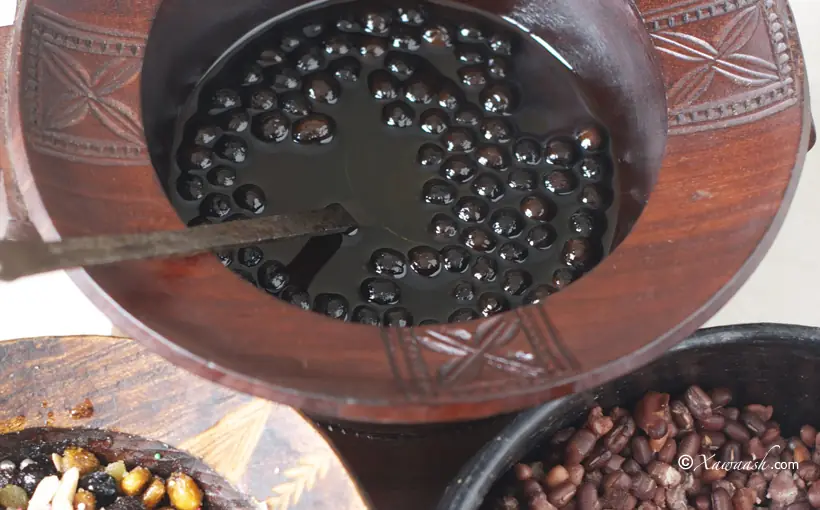
Wadaads (religious men) who come to the ceremonies to recite the Qur’an as well as other supplications, are the ones who are first offered the bun. The kur, the vessel in which the bun is served, is taken around the room so that everyone can inhale the aroma of the freshly prepared bun. Bun is usually eaten just a few at a time by placing two or three of the still hot, fried beans as well as a little of the ghee or oil in the palm of the hand. The beans are eaten off the palm and any remaining ghee is applied to the forehead.
Supplications are recited as the coffee beans are prepared for frying. There are supplications that are also recited when the fried beans are presented to the gathering. The final supplications are offered after consuming the bun. These supplications depend on the occasion. For example, families will sometimes host a prayer gathering to pray for a cure for a sick family member and the supplications are offered for that. Many families also hold small, weekly dhikr gatherings, usually on Fridays, and the supplications will be for warding off evil and getting blessings in one’s life. Some families host dhikr gatherings twice weekly, on Wednesdays and Fridays. It was believed that the angels like the smell of bun and they would visit the house where it is fried.
For the Sufi orders of Somalia, the heritage of the bun is an important part of the dhikr sessions. The recital and supplications can take several hours and chewing the bun helps the wadaads stay alert and it gives them energy. Somalis had a lot of regard and respect for wadaads and the bun that was prepared for them was fried with the best ghee available. When a prominent sheikh was offered bun fried in oil, he said as if addressing the bun:
Aw bunoow warkaa la helyee, burcadaa ku roon tahay!
Oh! bun. Your secret has been unearthed: your are best with ghee!
The hosts understood what he meant and they scrambled to fry another batch in ghee.
In some parts of Somalia, the bun is prepared for honouring guests and is presented after the meal. The special honour that was reserved for wadaads is extended to the guests.
Eating bun is also a morning ritual for some Somalis. It forms an important part of the breakfast. After eating bun, the ghee or oil is applied to the face making it ready to meet the world. This is known as foolbaxsi and it beats applying the best beauty lotions out there. The face will shine like a mirror and it will reflect the sunlight like varnish.
This reminds me of Daada, my paternal grandmother, who lived in Brava, Somalia. Her name was Hagia Ruqiya Madgabo Rufai and whenever I visited her in the mornings, she would rub sesame oil on my face. I disliked it but out of respect for her I never objected. As soon as she was out of sight, I would wipe off the oil. I should have known better.
Bun also forms part of the toor, which is a topping for ambulo and is also a snack on its own. The basic toor consists of bun, corn nuts or popcorn, sugar, and some of the ghee or oil in which the coffee beans for the bun were fried. Fancier versions of the toor have raisins and small bits of candy added. The bitterness of the fried coffee beans is offset by the sweet additions.
When preparing bun the traditional way, the hull is broken a little by biting it with the teeth. This helps get the hot oil inside the hull. However, when boiling the beans, water will also get inside and this can cause a lot of sputtering during frying. We did not break the hull but decided instead to use medium heat to give the beans ample time to cook fully and become very crumbly.
Watch

Ingredients
1 cup = 237 mL · 1 Tbsp = 15 mL · 1 tsp = 5 mL. All are level measurements.
Bun
Toor
Corn Nuts
Method
Tap a step to mark it done.
Clockwise from the left: Whole coffee beans with hull; Coffee beans; Hull Preparing the bun Wash the beans. Bring water to a boil then boil the beans for 1 minute.
Drain the water and dry the beans.
Fry the beans in hot oil using medium heat for 35 to 40 minutes. If you wish add browned butter or ghee just before turning off the heat.
Kur or kurbin: a special vessel for bun Kur or kurbin: a special vessel for bun Fried Whole Coffee Beans White corn kernels Soaking the corn Soak the corn overnight.
Or use the quick soak method: Boil the corn for 5 minutes then cover and let it soak for one hour.
Drain and rinse with cold water.
Preparing the corn nuts Place the corn in a pot and add the water.
Bring to a boil, then boil for 45 minutes.
Drain the corn.
Let the corn dry on a paper towel or a woven mat.
Fry the corn in hot oil on medium heat for 45 minutes.
Drain from the oil.
Preparing the toor Mix the toor by adding raisins, almonds, candy and sugar.
After the oil has cooled down, add 1/4 cup of the bun oil or any oil of your choice. Mix well.
Decorate with candy on the top.
Comments
24 commentsThanks! Your comment will appear once we’ve checked it.
Something went wrong. Please try again.
lovely..!!
Thank you!
asc marka hore wan idin mahad celinayaa in badan salan kadib walal waxan idin weydinaa corn nutka wan waayay dadka qaarna waxay i yiraah deen ganleyda daangada waaye corn nut ka ee bal i saxa, maxana ku badali karaa hadii aan waayay corn nutka plz toor ka na almondka ma ka deyn karaa . tan kale bunkii caadiga ahaa o somaliya ayaan hayaa ee i tilmaam sidan u sameyn lahaa coz waa markii igu horaysay o bun sameeyo kkkk. thanks again
Wacalaykum Assalaam Waraxmatullaahi Wabarakaatuh.
Adigaa mahadda mudan walaal. Waa run galleey daango ayaa loo yaqaanaa. Haddaad fiirisid meesha af Soomaaliga galleey cad ayaa ku qoran. Galleey walba oo waaweyn waa isticmaali kartaa. Waxaa muhiim ah si fiican inaad u karisid ilaa ay ka bislaato kaddibna si fiican u shiishid ilaa ay ka qababacleyso. Almondka waa ka dhaafi kartaa haddaadan jeclayn ama looska aad jeceshahay ayaa ku beddeli kartaa. Bunka aan isticmaalnay waa midka Soomaaliya. Sida aan u samaynay raac hadduu Ilaahay yiraahdo waa kuu hagaagi doonnaaa.
waaaaaaaaaaaaaw dad isku howlay inee ka faaiideeysano cuntada karin oo noo sameeyay webset aad u mahadsantihiiin xaqiiqada aad ugu helay waxbadane waa ka faaiideeystay mmmmmm qaaabka usoo duubteeyna aad ayeey u quruxbadantahay
Waa ku mahadsan tahay faallada fiican walaal. Waan ku faraxnay inaad ka heshay. Qayr ayaan kuu rajaynaynaa.
Asc walaalayaal salaan aad uqiimo Badan ayan hawada idiin soo Marin aniga iyo familkeyga oo dhan aad aad nooga farxisen markad alabtan noo soo galiseen wadNkii aad dibnoogu celiseen oo xusuus baad nagaliseen ee ilaahay haidin barakeeyo walaalo jiro ayaad tihiin waxana idin weydiin sidan bunka qolofka oga fiiqi lahaa hadaan bun is haysta helo wadna mahadsantihiin
Wacalaykum Assalaam Waraxmatullaahi Wabarakaatuh.
Waa ku mahadsantihiin salaanta qaaliga ah adiga iyo reerkaada. Waan ku faraxnay inaad jeclaateen soo’da Bun iyo Toor. Qolofta kore tartiib uga fiiq ama mid fiiqan ayaad gadan kartaa.
Asc marka ugu horeyeso waxaan hawada idiin soo marinaya salaan qaali ah marka labaad waxaan rajeyenaya marka uu wadanka nabad aad noqodo waxaa leyedin sinaya taash waayo waxaad soo banadhigataan cunto waliba oo aan hido iyo dhaqan u leenahay wana idinku faana xita dad ayaa yiraahdo cuntada somalida kuwaalati ma lahaan waxana tusaana xawaash markaas ayey la yaabaan marka abaalkaas idinkaa iskale ilaah ha idiin abaal guudo aduun iyo aaqiro anagana waan idiin ogsonahay
Wacalaykum Assalaam Waraxmatullaahi Wabarakaatuh.
Walaal waa ku mahadsan tahay salaanta qaaliga ah oo qiimaha badan. Farxaddiinna, xiriisikiinna iyo faallooyinkiinna ayaa nagu filan. Waan ku faraxnay hadalada qiiraha leh aad inoo soo qortay. Mahadsanid walaal.